How Long Should You Let Meat Rest After Grilling?

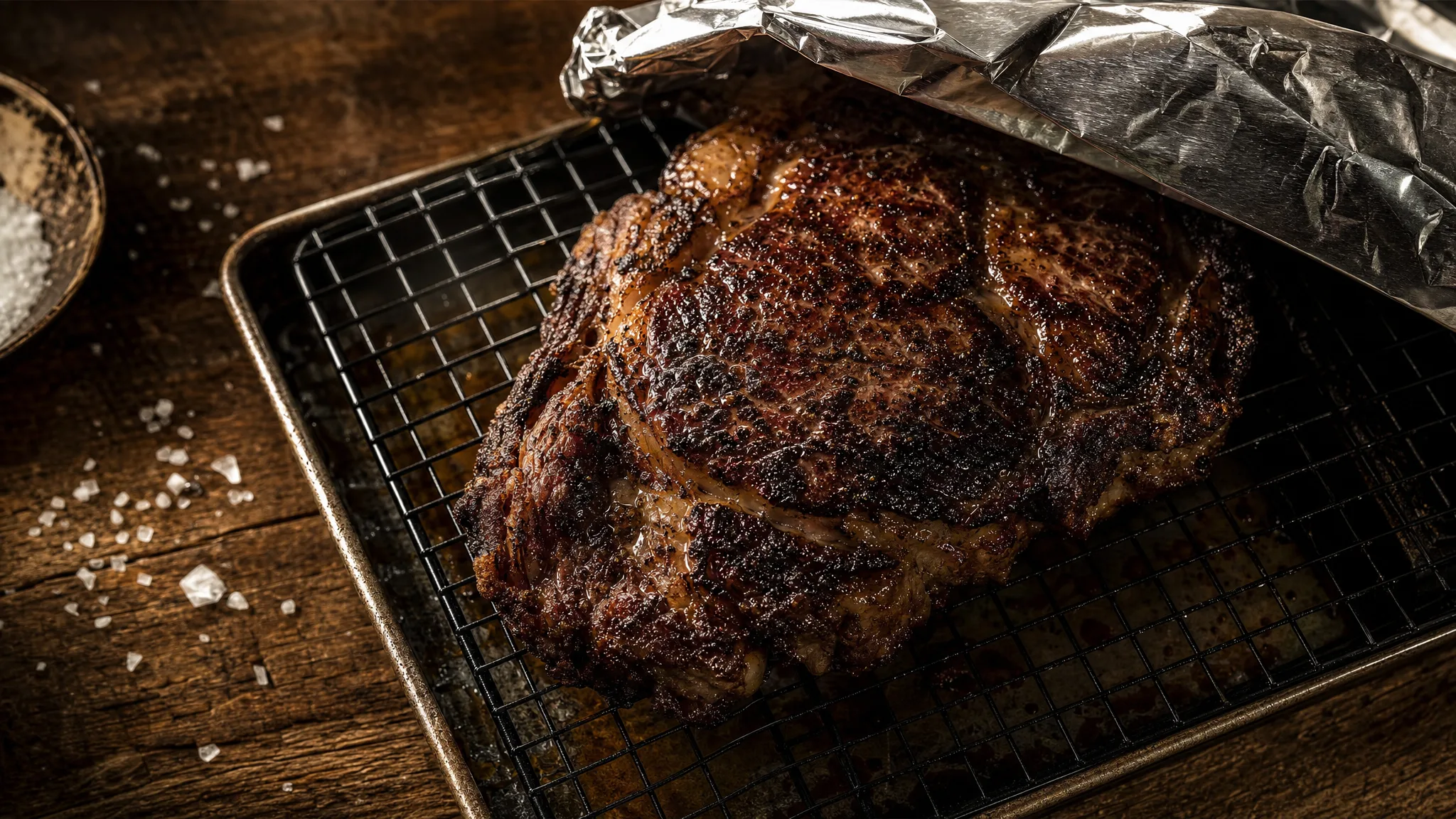
You nailed the sear. The crust is dark and crackly, the grill marks are sharp, and the internal temperature is exactly where you wanted it. So you slide the steak onto a cutting board, grab your knife, and slice it open right there on the spot. And then it happens - a river of juice floods the board, the meat looks gray and tired, and the first bite tastes like a sad memory of what should have been a great dinner.
That moment is why the rest is not a suggestion. It is the last real cooking decision you make, and it is the one most backyard cooks skip because it feels like waiting for nothing. It is not nothing. A proper rest is the difference between meat that gushes liquid the second your blade touches it and meat that holds every drop of flavor you spent an hour building.
Here is the full picture: why resting works, exactly how long to rest every cut you are likely to pull off a grill, how to plan for the temperature climb that happens after the meat leaves the heat, and the handful of mistakes that quietly undo all of it.
Why Resting Meat Matters More Than Any Rub You Will Ever Make.
You can buy the best steak in the county, season it perfectly, and cook it over flawless coals. Then slice it too early and serve something merely fine. Rest it properly and that same steak eats like a steakhouse plate. No rub, sauce, or gadget delivers a bigger payoff for zero extra effort than simply walking away for a few minutes.
Raw beef is roughly 75 percent water. When you apply grill heat, muscle proteins begin to contract and physically squeeze that water out of the fibers. Below about 120 degrees internal temperature the proteins mostly shrink in diameter, so moisture loss stays low. Push past 120 and they start shrinking lengthwise too, which drives moisture toward the surface and into the spaces between fibers. Slice at that exact moment and all of that displaced liquid is sitting right at the surface, ready to run.
Give the meat a few minutes off the heat and the process partially reverses. The fibers relax, the temperature evens out from the hot exterior to the cooler center, and dissolved proteins reabsorb a good share of the moisture. Resting does not create new juice. It keeps the juice you already paid for from ending up on your cutting board instead of in your mouth.
The pork loin experiment that proves the point.
If you want numbers instead of theory, America's Test Kitchen ran the test. They roasted pork loins at 400 degrees to an internal temperature of 140 degrees and measured how much liquid each roast lost as it rested:
- No rest: 10 tablespoons lost
- 10 minutes: 4 tablespoons lost
- 20 minutes: 2.5 tablespoons lost
- 30 minutes: 1 tablespoon lost
- 40 minutes: 2.5 teaspoons lost
A 10 minute rest cut liquid loss by roughly 60 percent. A 40 minute rest cut it by roughly 90 percent - and the roast was still hot enough to serve. That is not a subtle improvement. That is a different dinner.
Large cuts get better with a long rest, not just a short one.
Brisket and pork butt go the other direction entirely. They cook to 200 to 205 degrees, which drives off enormous amounts of moisture, yet they come out tender and juicy anyway. The reason is connective tissue. Hours of low and slow heat convert collagen into gelatin, and that gelatin rehydrates the meat during the rest. It also thickens as the meat cools, so more of it stays inside when you slice or pull. This is why a brisket rested for two hours beats an identical brisket sliced after 20 minutes - and why competition teams treat the rest as a stage of cooking, not a pause.
How Long to Rest Meat After Grilling: A Cut-by-Cut Guide.
Two rules of thumb cover most of it. Small, thin cuts need less time. Large, thick cuts need more. And when in doubt, resting for about half the cooking time is a reliable middle ground - a steak that grilled for 12 minutes is happy with 5 to 6 minutes of rest, while a 12 hour brisket wants considerably more than six hours of rest, which is why the practical ceiling for barbecue is usually a hold of one to four hours.
| What You Grilled | Pull It Off The Heat At | Minimum Rest | Ideal Rest |
|---|---|---|---|
| Thin steak (3/4 inch) | 5 degrees under target | 3 minutes | 5 minutes |
| Standard steak (1 inch) | 5 to 8 degrees under target | 5 minutes | 8 to 10 minutes |
| Thick steak (1.5 inches and up) | 8 to 10 degrees under target | 8 minutes | 10 to 15 minutes |
| Burgers and sausage | 160 degrees (ground meat) | 2 minutes | 3 to 5 minutes |
| Chicken breast | 160 degrees | 5 minutes | 5 to 10 minutes |
| Chicken thighs and quarters | 175 to 185 degrees | 5 minutes | 10 minutes |
| Whole chicken | 160 degrees breast, 175 thigh | 10 minutes | 15 to 20 minutes |
| Pork chops | 140 degrees | 5 minutes | 10 minutes |
| Pork loin roast | 140 degrees | 10 minutes | 20 to 30 minutes |
| Ribs | When the bend test passes | 10 minutes | 15 to 20 minutes |
| Brisket or pork butt | 200 to 205 degrees | 30 minutes | 1 to 4 hours |
| Fish fillets | When it flakes at 130 degrees | 2 minutes | 3 to 5 minutes |
Steaks: the five to ten minute window.
Steak is where resting pays the loudest dividends because the cut is dense and full of juice. A one inch ribeye or strip pulled at 125 to 130 degrees for medium rare wants 5 to 10 minutes. Something thick like a two inch cowboy ribeye or a tomahawk deserves 10 to 15. If you are working with a specific doneness target and timing plan, our guide to grilling a medium-rare ribeye perfectly every time breaks down the pull temps and timing end to end.
Burgers and sausage: short, but not zero.
Ground meat has less structure to hold moisture, so the rest is brief - 3 to 5 minutes. It still helps. A smashed patty rested five minutes holds together better, releases less grease onto the bun, and eats noticeably juicier. Sausages benefit even more, because a hot smoked link sliced immediately sprays fat everywhere and looks dry on the plate. Give links 3 to 5 minutes and they slice clean and stay glossy.
Chicken: rest to hit 165 the easy way.
Poultry is where carryover cooking becomes your best friend. Pull a whole bird at 160 degrees in the breast and let it rest 15 to 20 minutes, and carryover will walk the breast the rest of the way to a safe 165 while the meat stays moist. Pull it at 165 and rest it and you are eating dry breast meat. Individual breasts pulled at 160 and rested 5 to 10 minutes land perfectly. For the setup and timing on a whole bird, see our walkthrough on grilling a whole chicken with indirect heat. Thighs and leg quarters are far more forgiving and actually improve when cooked to 175 to 185 and rested 10 minutes.
Pork: the cut that changed its reputation.
Pork chops and loin roasts are lean, which means they have little margin for error. Cook them to 140 and rest 10 minutes for chops, 20 to 30 for a loin roast, and you get juicy pork instead of the gray hockey puck an entire generation grew up thinking was normal. Larger pork cuts like shoulder need a long rest - at least 30 minutes, and an hour or more is better. Our pork butt smoking guide covers the stall, the wrap, and why the rest is where pulled pork goes from good to memorable.
Fish: quick, gentle, and easy to overcook.
Fillets are thin and delicate, so the carryover rise is small and fast. Two to five minutes is plenty. Salmon and trout are done when they flake at around 130 degrees, and they continue to firm up as they rest, so pulling them a touch early is almost always the right call.
Carryover Cooking: The Temperature Climb You Have to Plan For.
Meat does not stop cooking when it leaves the grill. Heat stored in the outer layers keeps traveling inward toward the cooler center, so the internal temperature continues to rise for several minutes. Ignore this and you will consistently overshoot doneness - which is the single most common reason people think their thermometer is broken when the steak they pulled at 130 comes out medium well.
The size of the rise depends on mass and cooking temperature. Thin steaks climb 3 to 5 degrees. Standard one inch steaks climb 5 to 8. Thick steaks of 1.5 inches or more climb 8 to 10. Large roasts and whole chickens can climb 10 to 15 degrees. That is why the table above lists pull temperatures below your target - you are cooking on credit and paying it off during the rest.
How to use this without guessing.
Pick your desired final temperature, subtract the carryover rise for that cut and thickness, and pull the meat there. Then confirm with the thermometer after the rest rather than before. If you pulled a thick steak at 122 for a 132 medium rare and it reads 131 after 12 minutes, your plan worked. If it blew past, you probably rested it in a hot spot or covered it too tightly, which traps heat instead of letting it dissipate.
How to Rest Meat Without Wrecking the Crust.
Where and how you rest matters as much as how long. Get this wrong and you can undo a beautiful sear in five minutes.
Tent loosely with foil - never wrap it tight.
A loose foil tent across the top of the meat is fine for shorter rests. Tightly wrapping a seared steak in foil traps steam against the crust and turns it soggy. If you want to preserve a hard sear, leave the crust exposed or drape the foil so air can still circulate underneath. For long barbecue rests the math changes - brisket and pork butt are usually wrapped in butcher paper or foil during the cook anyway, and holding them wrapped in a cooler is standard practice.
Rest on a rack or a warm plate, not a cold one.
The best setup is a wire rack set over a sheet pan. The meat stays out of its own juices, the crust stays dry and crisp, and cleanup is easy. A warm plate or a wooden cutting board is the next best thing. A cold ceramic plate pulls heat straight out of the bottom of the meat and gives you a lukewarm steak with a steamed underside.
Keep it warm without cooking it further.
For long holds, wrap the meat in foil or butcher paper, then towels, and set it in a cooler with the lid closed. A brisket pulled at 203 will still be comfortably hot two hours later. Do not park rested meat in a warm oven unless you are deliberately holding it - a 170 degree oven will keep cooking it and dry it out.
The Half-the-Cooking-Time Rule, and When to Break It.
Rest for about half the time the meat spent on the grill. It is a genuinely useful default because it scales automatically. Ten minute steaks get five. A 20 minute pork tenderloin gets ten. But the rule breaks down in both directions.
Break it downward for thin cuts, delicate fish, and anything lean. Resting a burger for 15 minutes just gives you a cold burger. Break it upward for barbecue. A 14 hour brisket does not need seven hours of rest, but it absolutely wants an hour or two, and a two hour hold is a common competition standard precisely because the meat keeps improving as it sits. If someone claims the half-time rule means resting a whole chicken for 45 minutes, use your judgment: 15 to 20 minutes is where poultry peaks.
Does Resting Make Grilled Meat Safer to Eat?
Resting is not a substitute for reaching a safe internal temperature, but the two are connected. For whole cuts of beef, pork, veal, and lamb, the food safety target is 145 degrees followed by a three minute rest. That rest is part of the guideline, not a bonus - it gives the surface-to-center temperature time to equalize. Poultry must reach 165 degrees throughout, and ground meat must hit 160, whether it is a burger, a brat, or a sausage link.
That is exactly why pulling a whole chicken at 160 and resting it works so well: carryover carries the breast meat the rest of the way into the safe zone while it stays juicy. Just always verify with a thermometer in the thickest part before you serve, and never assume carryover did the job. Also keep an eye on the clock during long holds. Hot food should stay above 140 degrees, and anything sitting out past two hours should be refrigerated or discarded.
Five Resting Mistakes That Cost You Juicy Meat.
- Cutting in to check doneness. One knife cut in the middle of the grill session lets juice escape and effectively ends the rest. Use a thermometer instead, and take readings at the thickest point without carving.
- Skipping the rest because you are hungry. Everyone is hungry. Five minutes is the difference between a great steak and a good one, and it is the cheapest improvement in all of grilling.
- Wrapping tight in foil. Great for long barbecue holds, terrible for a seared steak or a burger. Tight foil equals steam equals soft crust.
- Resting in a cold pan or on the hot side of the grill. One pulls the heat out, the other keeps the heat coming. Move it fully off the cooker and onto a rack or warm plate.
- Resting the same amount no matter the cut. A 3 minute burger rest and a 90 minute brisket rest are both correct. Match the rest to the mass.
Put It Into Practice This Weekend.
Set a timer next cookout. Pull your steak five degrees early, set it on a rack, walk away for eight minutes, and then slice it. Watch how little liquid hits the board. Taste how much more tender the same cut feels. Once you see it once with your own eyes, resting stops feeling like waiting and starts feeling like the easiest upgrade in your entire grilling routine.
It is the rare technique that costs you nothing, requires no new gear, and improves every single thing you cook - steak, chops, chicken, ribs, fish, and barbecue alike. Give the meat its ten minutes. It earned them.


