How to Put Out a Charcoal Grill Safely

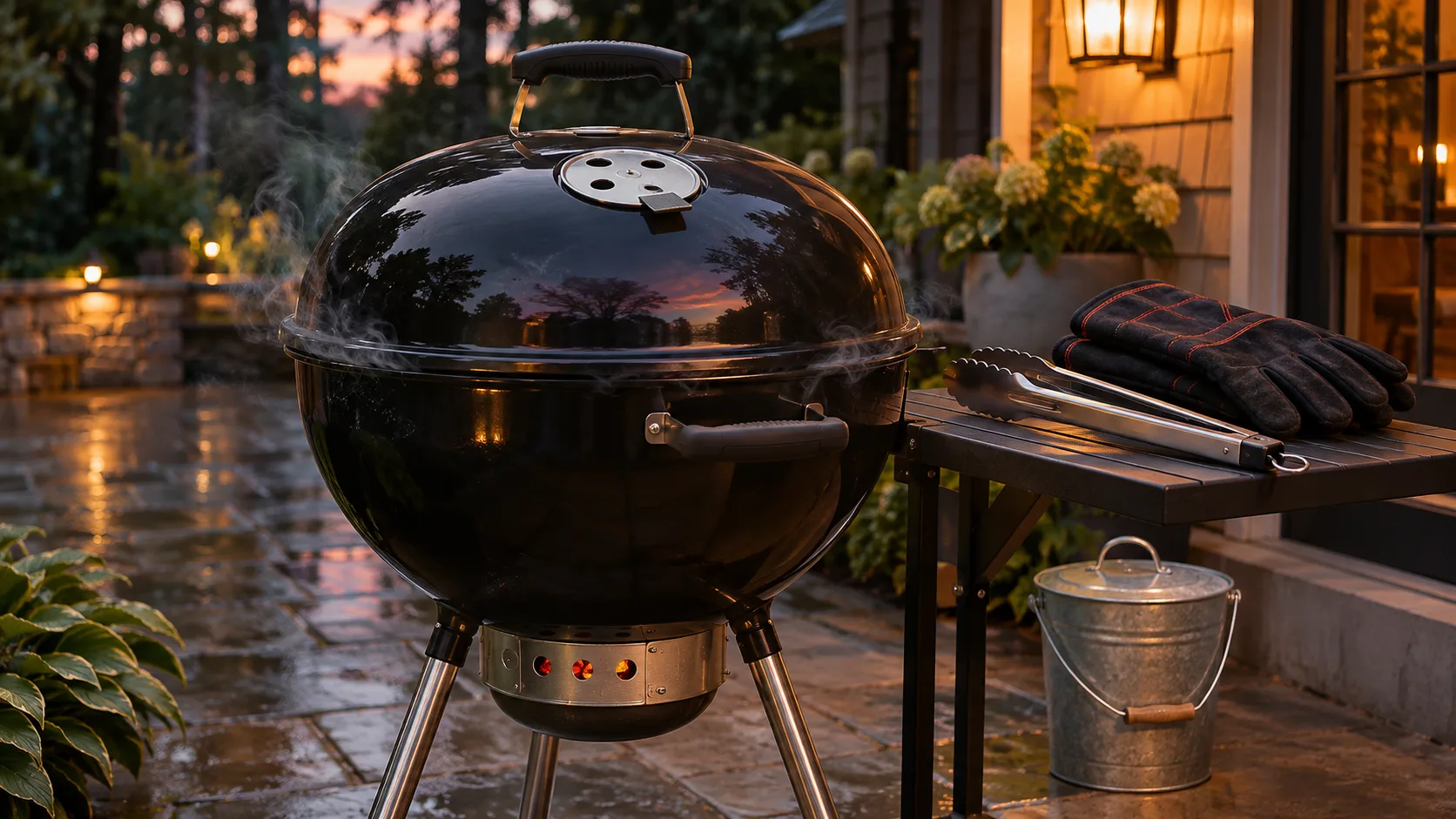
You have just pulled the last burger off the grate, the plate is headed inside, and the party is moving to the patio. The grill, however, is still wide awake. A charcoal fire does not come with an off switch, and the hour after you stop cooking is the least supervised part of the whole cook - not because anything is likely to go wrong, but because nothing is going to stop it if something does.
Putting a charcoal grill out safely comes down to three things: starve the fire of oxygen, give the coals far more time than you think they need, and handle whatever is left like it is still hot - because it is. Do those three things and you get a grill that is cool by morning, charcoal you can use again next weekend, and an ash pile that never ends up smoldering in the bottom of a trash can. Skip them and you join the small, unhappy club of backyard cooks who learned that "it looked out" is not the same thing as "it is out."
Why a Charcoal Grill Never Really Goes Out on Its Own.
Fire needs three things: fuel, heat, and oxygen. You already fed it the fuel, and the heat is self-sustaining once a bed of coals is going. That leaves oxygen as the only lever you can pull. On a charcoal grill, oxygen enters through the bottom vents, feeds the fire, and exits through the top vent along with the smoke. Shut both of those and the fire consumes whatever air is trapped inside the cooker, then starts to die. It does not die instantly, and it does not die politely - it fades over hours.
There is a second reason charcoal hangs on. A bed of lit coals is a self-insulating system. Ash and partially burned briquettes pile up around the hottest pieces and hold heat in the same way a blanket does, so the middle of a charcoal bed can stay hot long after the surface looks gray and dead. Wind makes it worse. A grill sitting in a breeze with a cracked lid or a vent left a quarter inch open is a grill that keeps finding air. And if any fat from the cook dripped down onto the coals, you have fuel that burns hotter and longer than the charcoal itself.
Manufacturers are blunt about the timeline for a reason. Kingsford tells people to leave a closed grill untouched for a full 48 hours if they want the safest possible result, and to wait at least 24 to 48 hours before cleaning anything out. That is not marketing caution - hot embers really can survive overnight under a layer of ash, and a buried ember that meets fresh oxygen is a fire that starts itself.
The Shutdown Sequence That Works Every Time.
The good news is that shutting down a charcoal grill is not complicated. It is just slow, and the slowness is the point. Here is the sequence, in order.
Close the lid first.
Food off, lid down, latch it if your grill has one. The lid is not just a cover - it turns your grill into a sealed box. On a kettle, that means setting the lid so the top vent is over the cooler side rather than directly over the coal bed, which keeps heat from stacking straight up through the vent opening.
Then close the bottom vent.
Top vent closed and bottom vent wide open is the classic mistake. The exhaust is shut, so smoke and heat have nowhere to go, but the intake is still feeding oxygen up through the coal bed. The fire will not go out - it will just burn dirty and uneven, and it may push smoke out around the lid rim for hours. Close both. All the way. Bottom vent, top vent, lid.
If you want to understand exactly how much those two dampers control, and what each one does to temperature and burn rate, our guide to how charcoal grill vents control temperature walks through the intake and exhaust relationship step by step. It is the same mechanism you are using right now, just in reverse - instead of dialing heat up, you are dialing it down to zero.
Use gloves, not fingertips.
Vent handles on a grill that has been running at 400F for an hour are metal, and they are hot enough to leave a mark. Put on insulated barbecue gloves before you touch anything on the outside of the cooker, and use long metal tongs for anything inside it. If you have ever pulled a vent damper open barehanded out of habit, you already know why this line is here.
Give it hours, not minutes.
Once the lid and both vents are closed, walk away. Do not lift the lid to check. Every time you open it you hand the fire a fresh charge of oxygen, and you also get a face full of hot smoke. Come back in four hours, or better, come back in the morning.
How Long Coals Actually Stay Hot.
This is where most people get impatient and where most grill fires start. A closed charcoal grill does not cool on a kitchen timeline. Here is what is actually happening, hour by hour.
| Time after closing up | What is happening inside | What you should do |
|---|---|---|
| 0 to 30 minutes | Air is used up, flames die back, coals are still well over 400F and glowing under the ash. | Nothing. Lid stays shut. Keep kids and pets away from the grill. |
| 1 to 2 hours | Coals shrink, ash builds, heat drops - but the core of the bed is still hot enough to burn skin and ignite paper. | Still nothing. Do not dump, scoop, or "just peek." |
| 4 to 8 hours | Most coals are dead and the outside of the grill is warm rather than hot. Buried embers are possible. | Earliest point you can consider cleaning, and only after a careful touch test with the back of a gloved hand. |
| 24 to 48 hours | Ash and leftover charcoal are cold throughout. This is the window manufacturers recommend for full safety. | Scoop, sort, save what is reusable, dispose of the rest in metal. |
The practical rule: if you are not sure, it is not cold. A charcoal bed that has been closed up for two hours feels warm through the lid and looks completely dead when you open it, and it will still scorch a paper plate. Give it until the next day. The grill is not going anywhere, and neither is the ash.
One more consideration: where the grill sits matters as much as how long you wait. A kettle parked against the siding, under a wooden pergola, on a deck railing, or inside a garage keeps radiating heat into something combustible for hours after you close it. Once the lid is down and the vents are shut, roll the grill out to an open spot on the patio or lawn, at least a few feet from the house, the fence, and anything that can burn. That single habit prevents more damage than any other step in this article.
When You Can't Wait: The Metal Can Method.
Sometimes you cannot leave the grill sitting for a day. Tailgates end, campsites get packed up, and competition cooks have a truck to load. This is where a small metal trash can with a tight-fitting lid earns its place in the gear pile - a lot of experienced cooks keep a six-gallon galvanized can specifically for this job.
Here is the method. Put on insulated gloves. Lift the grate if you can, or work through it with long tongs, and dump the coals and ash straight into the metal can. Get the lid on immediately and press it down. A metal can with a tight lid is far more airtight than any grill, so the fire is starved much faster and the whole load cools in a fraction of the time it would take in the cooker.
A few non-negotiables for this approach. Never use a plastic bucket or a plastic-lined bin - coals will melt through it. Set the can on concrete, gravel, or bare dirt, never on grass, a wood deck, or a truck bed liner, because the can itself gets hot enough to scorch. And do not put the can inside the cab of your vehicle until it is cool to the touch; that can take a while, and it depends on how many coals you started with. In the bed of a truck with airflow around it, it is a much safer ride home.
Should You Pour Water on Hot Coals?
You will find two camps on this, and both have a point. Charcoal makers generally say water is fine if you need to cool a fire quickly - pour slowly, stand back, stir with long tongs, and keep going until the ash is cool to the touch and there is no hiss left. Others argue against water entirely, and their reasons are worth hearing.
Cold water hitting a hot grill causes thermal shock, and on a ceramic kamado or an enameled kettle that can mean a cracked or chipped surface you cannot fix. The steam cloud is a genuine burn hazard, especially if you are leaning over the cooker. Water turns ash into a gray sludge that splatters onto the deck and hardens in the bottom of the grill, where it clogs the vents and the ash sweeps you will need next weekend. And if the coal bed is loose, water can wash still-burning coals right out the bottom vent onto the ground.
My take: at home, with nowhere to be, do not use water. Closed vents and time are cleaner and safer. Use water only when you have to leave and cannot take the coals with you - a campsite, a park grill, a rental - and then use the minimum amount, pour it slowly from low down, keep your face back, and stay with the grill until the ash is cool. Never throw water on a grease flare-up. Water on burning fat sprays flaming grease outward and turns a manageable flare-up into a real fire. Lid on, vents closed, and let it smother.
Saving Leftover Charcoal for the Next Cook.
Here is the part that pays for the patience. A closed-down charcoal grill usually leaves behind a surprising amount of usable fuel - partially burned briquettes and lump that still have hours of heat in them. Throwing that away is throwing away money, and it is also more ash to deal with.
What to keep.
Pick out pieces that are still solid, still black or dark gray, and dry. If a briquette holds its shape and has some weight to it, it has fuel left. Lump charcoal tends to survive two or three cooks; briquettes are usually good for one more round before they crumble. Skip anything that has broken down into gray powder, anything that was soaked in drippings, and anything that got wet - damp charcoal is dead weight that smokes and sulks instead of lighting.
How to store it.
The simplest storage is the grill itself. Once everything is cold, shake the loose ash through the grate, leave the reusable pieces sitting in the bowl, and put the lid back on with the vents closed. A covered grill keeps rain off and keeps the coals dry. If you would rather get them out of the cooker, use a metal container with a lid or a dedicated charcoal bin kept somewhere dry - not a paper sack in a damp garage, and not an open bucket on the deck.
How to relight them.
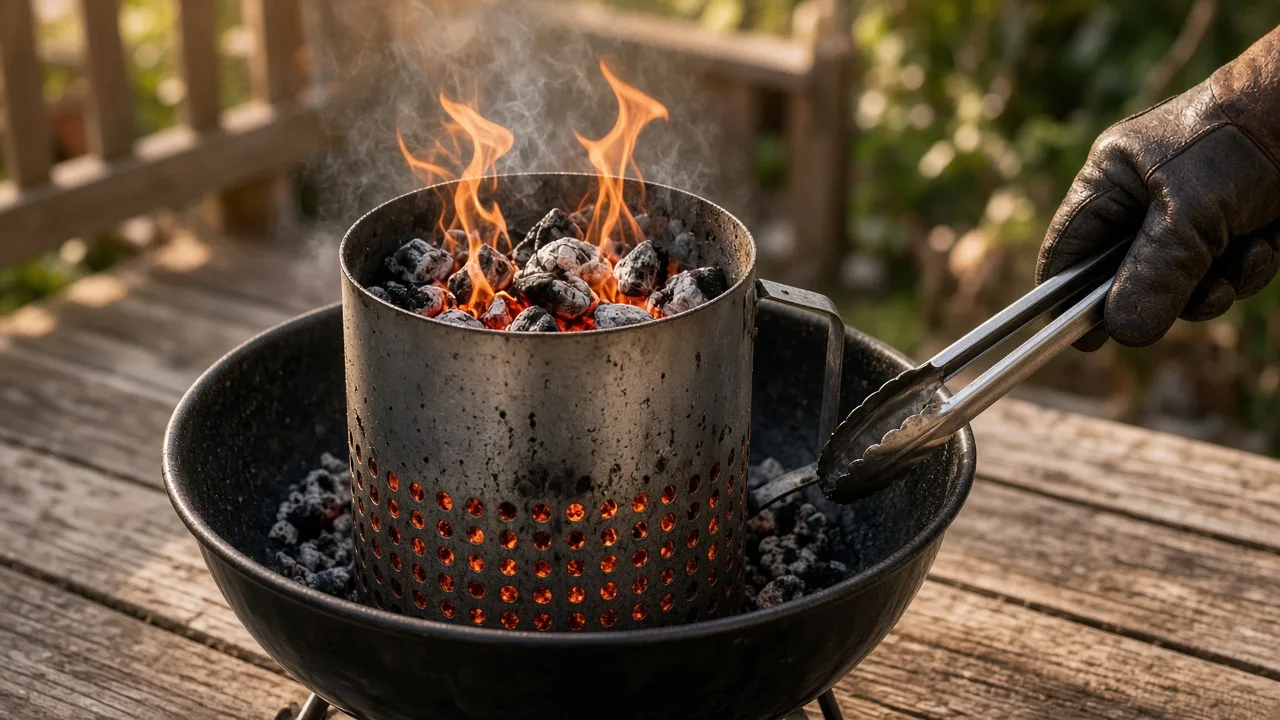
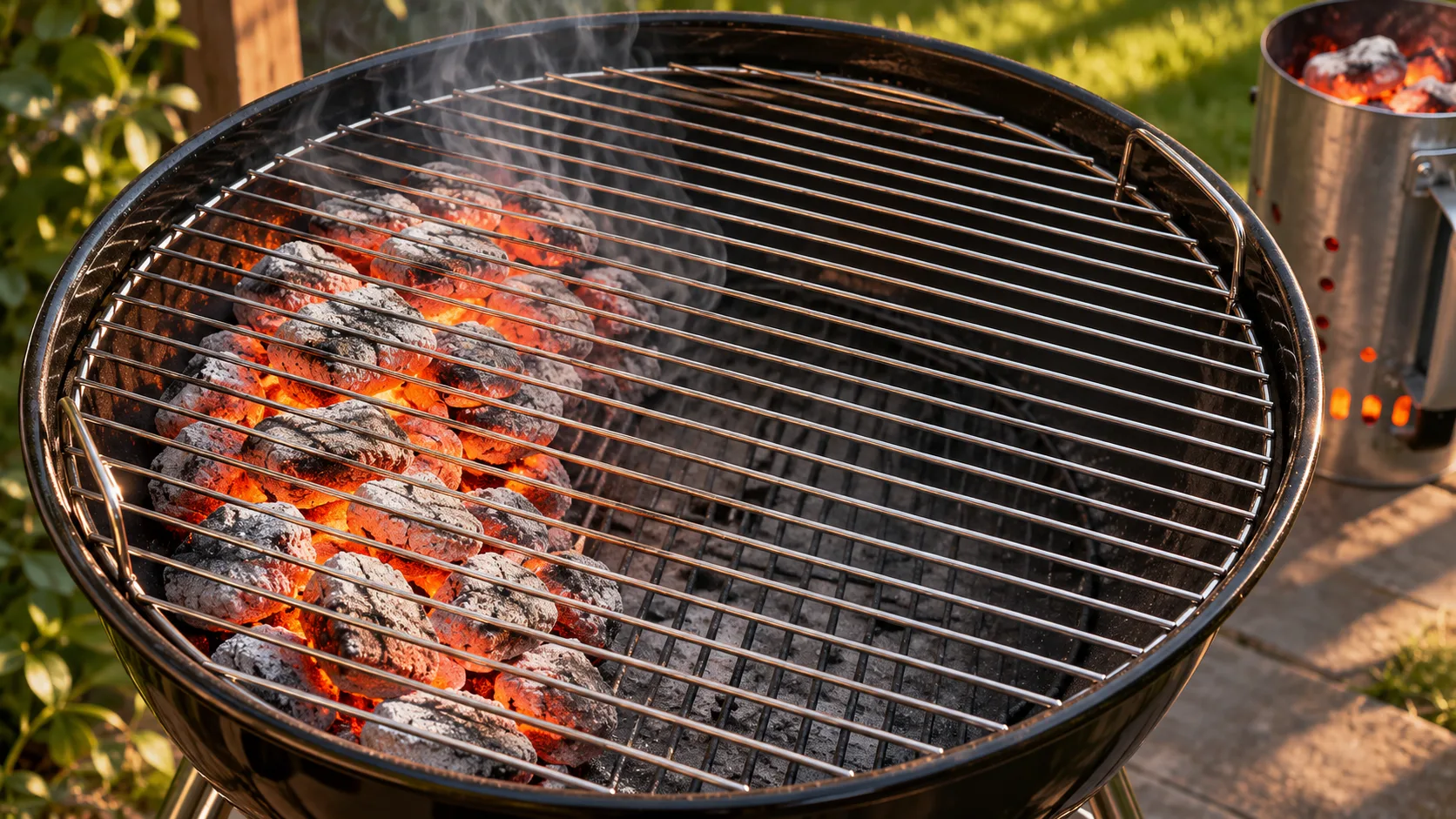
Old coals are harder to light than new ones, so do not try to run a fire on leftovers alone. Load your charcoal chimney starter with fresh charcoal, light it as usual, and pour the hot new coals over a bed of the saved ones in the grill. Or put the saved pieces in the bottom of the chimney and top them with fresh briquettes so the new fuel does the work and the old fuel catches from above. Either way you are using less new charcoal for the same cook.
If you want to dial in exactly how much fuel a given cook should take - so there is less to save in the first place - our breakdown of how much charcoal you actually need has chimney-load charts by grill size and food, plus the pound-per-hour math for long smokes. Starting with the right amount is the cheapest form of fire management there is.
Disposing of Ash Without Starting a Trash Truck Fire.
Ash looks harmless. It is not. Trash and recycling crews deal with can fires every year that trace back to fireplace and grill ash that "seemed cool," and the damage is not limited to the can - a smoldering load in a collection truck can destroy the vehicle. Treat ash like what it is: a pile of material that can hold a live ember for days.
The metal can rule.
Cold ash goes into metal. A galvanized trash can with a lid, a metal ash bucket, or a steel pail - all fine. Keep the can outside, on a non-combustible surface, well away from the house, garage, deck, and fence. If you are not certain the ash is cold, put the lid on and leave it another day. When in doubt, wait.
The foil wrap.
For small amounts, lay out a sheet of heavy-duty aluminum foil, scoop the cold ash and spent charcoal onto it with a metal scoop, and wrap it into a tight packet before it goes in the can. It is a cheap extra layer between a stray ember and everything else in your trash. If your grill has an ash catcher or a dump door, use it - shaking the ash through the grate and collecting it in the catcher keeps the mess contained.
Never do this with ash.
Do not put ash in a plastic bag, a paper bag, or a cardboard box, no matter how cold you think it is. Do not dump it into a wooded area, a brush pile, or a flower bed while it is still warm. Do not set the ash can on a wood deck or inside a garage. And do not leave ash sitting in the grill for months at a time - ash holds moisture against the metal, rusts out the bowl, and packs into the vents until your grill cannot breathe. Clean it out once it is cold, and your cooker will last years longer.
What about the garden?
Briquette ash is not fertilizer. Charcoal makers specifically advise against composting used briquettes or working them into garden soil, because briquette ash carries additives that do not break down and does not help organic material decompose. Lump charcoal ash is closer to plain wood ash, which is alkaline - a small amount can go in a compost pile or around alkaline-loving plants, but never on acid-loving shrubs and never in a thick layer. If you are not sure which you burned, bag it and bin it.
If your grill itself is at the end of its life rather than just dirty, that is a separate job with its own rules - our guide to how to dispose of a grill covers the safe and responsible routes for the hardware, including what has to come out of it first.
Five Shutdown Mistakes That Cause Real Fires.
Almost every grill fire that makes the news started with one of these five moves. None of them feel dangerous at the time, which is exactly why they happen.
- Closing only the top vent. The fire keeps pulling air from below and smolders for hours. Close both, every time, and check them with your hand before you walk away.
- Dumping ash the same night. "It looked gray" is not a temperature reading. Give it 24 hours minimum, 48 if you want to be sure.
- Using a plastic bucket or bag. Hot coals melt straight through plastic and drop onto whatever is underneath - grass, a deck, a garage floor.
- Throwing water on a grease fire. Water spreads burning fat. Lid on, vents closed, and let the lack of oxygen do the work.
- Parking a warm grill against the house. Even shut down, a grill radiates heat for hours. Roll it clear of siding, railings, and anything that can catch.
The Thirty-Second Shutdown Checklist.
- All food off the grate, plate covered, guests clear of the grill.
- Insulated gloves on before touching any metal.
- Lid closed and latched.
- Top vent closed all the way.
- Bottom vent closed all the way.
- Grill moved at least a few feet from the house, fence, deck rail, and anything combustible.
- Kids and pets warned, or a barrier put up if the grill is low.
- Calendar note set for tomorrow: clean out, sort reusable charcoal, dispose of cold ash in metal.
That is the whole routine - a minute of work and a night of patience. A charcoal grill that is properly shut down is a grill you can trust to sit quietly until morning, with a bowl of reusable coals waiting for the next cook and nothing smoldering where you cannot see it. Fire is a great servant in the backyard and a terrible houseguest. Close the vents, give it time, and it stays in its place.