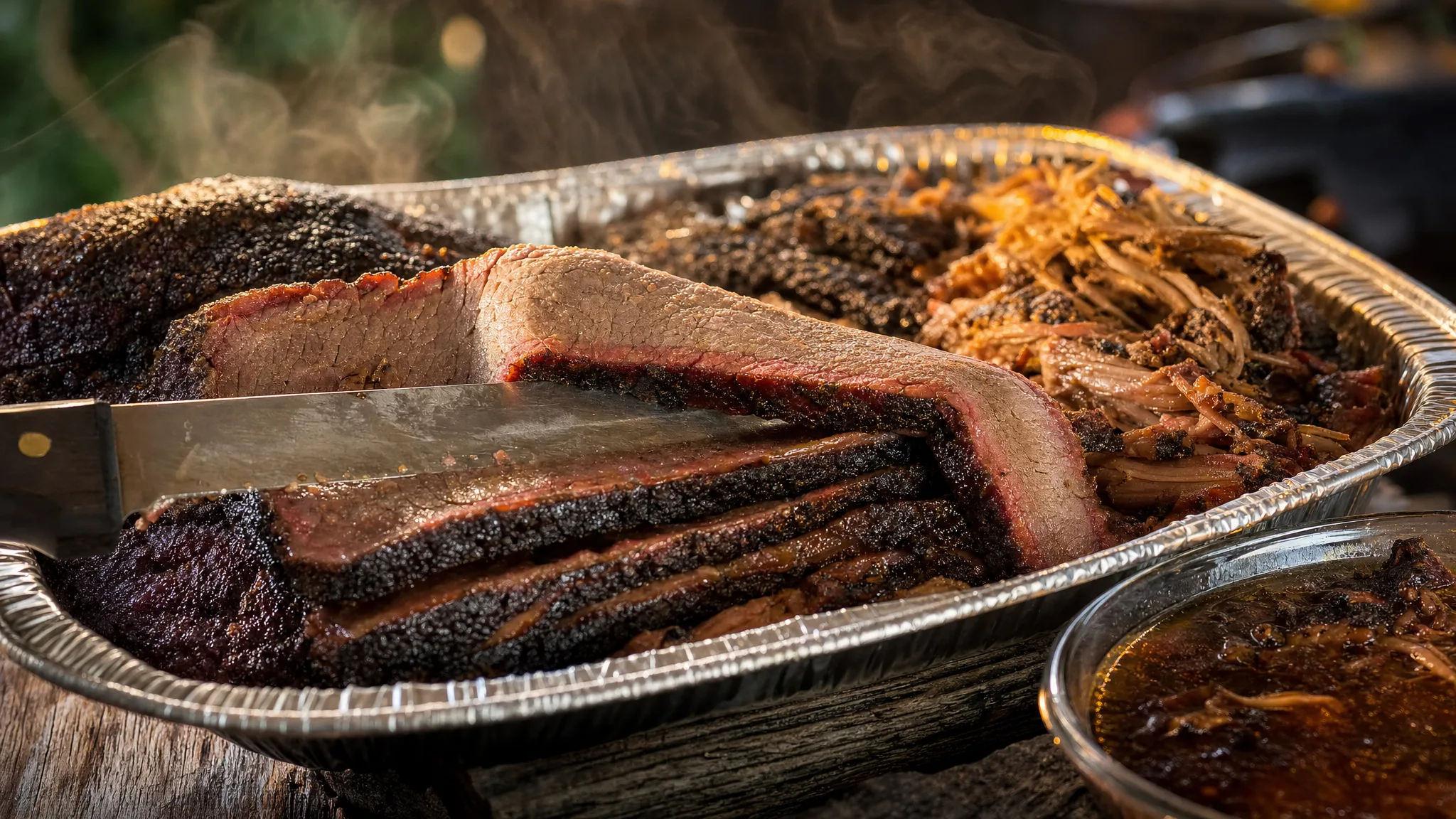
How Long Should You Rest a Brisket?

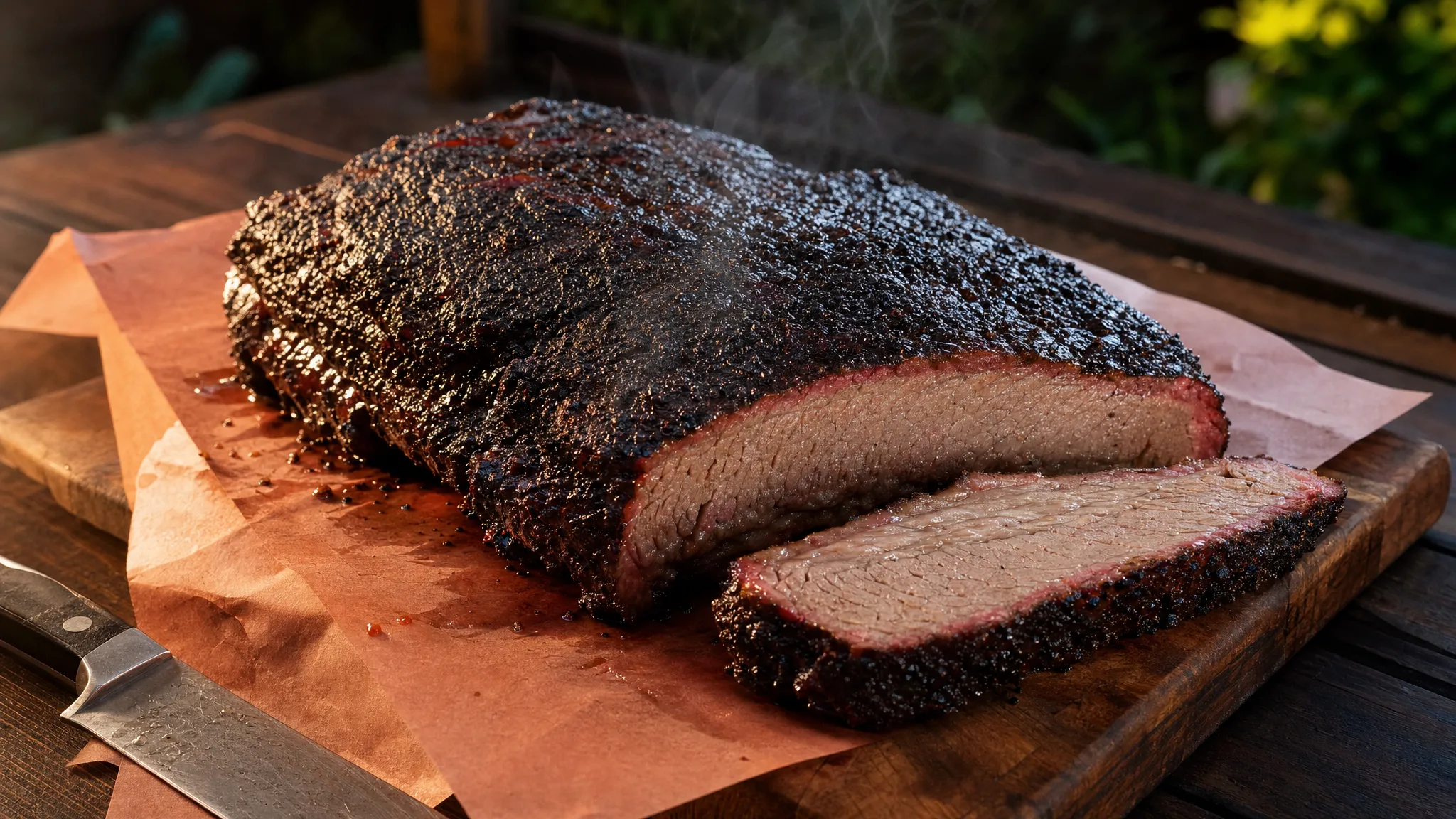
You just pulled a brisket off the smoker. Twelve hours of watching a needle, feeding wood, spritzing, wrapping, and second-guessing yourself — and now the hard part is over. Except it isn't, because the single most common way to ruin a perfectly smoked brisket happens after it comes off the heat. It gets sliced too early, or it sits on the counter too long, or it goes into a cooler that was never warmed up, and suddenly all that patience turns into dry, crumbly slices on a cutting board.
So how long should you rest a brisket? The honest answer is a range, not a number, and the range depends on what you're actually trying to do — serve it in twenty minutes, or hold it for six hours until your brother-in-law finally shows up. Once you understand the difference between a rest and a hold, and once you know the temperature you're managing the whole time, you can handle either situation without fear. Let's walk through it the way you'd actually do it in your own backyard.
Resting and Holding Are Not the Same Thing.
This is the distinction that clears up about ninety percent of the confusion online. People use "rest" and "hold" interchangeably, then wonder why their brisket is mushy at 2 p.m. and cold at 6 p.m. They're two separate phases with two separate jobs.
The rest is mandatory.
A rest is the window immediately after the brisket leaves the smoker. The meat is somewhere around 200-205°F, the collagen has just finished breaking down, and the muscle fibers are tight and loaded with hot liquid. During the rest, the temperature drifts back down, the fibers relax, and the juices that were pushed toward the center redistribute back out through the whole cut. Resting is not optional. Every brisket needs one, even if you're starving and the whole family is standing in the yard holding paper plates.
The hold is optional — and powerful.
A hold is what comes after the rest, when you deliberately keep the brisket warm for several more hours because dinner is later than the cook finished. This is where backyard cooks get nervous and where competition teams and BBQ joints get calm. A long hold isn't a compromise or a workaround. Done at the right temperature, it actually improves the brisket — the meat keeps tenderizing gently, and slicing gets more consistent from flat to point. The trick is holding it warm, not hot, and we'll get to exactly what that means.
How Long to Rest a Brisket: The Short Answer.
If you need one number: rest it for at least one hour, and two hours is better. Anything from one to three hours on the counter (wrapped) is a completely normal, safe, effective rest for a backyard brisket. That's the window where the meat cools enough to firm up for clean slices, and where the juices settle instead of running out the moment your knife touches the bark.
Here's how the timing shakes out in practice:
| Situation | Rest Time | What It Gets You |
|---|---|---|
| Serving within the hour | 30-45 minutes, wrapped | Bare minimum. Slices will still be a little loose and juicy on the board. |
| Normal backyard cook | 1-2 hours, wrapped | The sweet spot. Firm enough to slice, hot enough to serve, juices stay put. |
| Guests arriving later | 2-4 hours in a cooler | Tenderizes further and holds heat without extra cooking. |
| Cooking ahead or catering | 4-12 hours held at 140-150°F | Restaurant-style holding. Requires a controlled heat source or a great cooler. |
Notice what's not on that table: "rest until you feel like slicing it." A brisket that sits on the counter for four hours unwrapped is a brisket that has spent time in the danger zone and has also lost the heat you worked all night for. The rest has a floor and a ceiling, and both matter.
Why Resting Works: Carryover Cooking and Juices That Stay Put.
Two things happen during a rest, and they're both worth understanding because they explain why the timing rules exist.
Carryover cooking keeps working after the heat stops.
When you pull a brisket, the outside of the meat is much hotter than the inside. That stored heat keeps conducting inward for a while, so the internal temperature rises another 5-10°F after the brisket leaves the smoker. This is carryover cooking, and it's why pulling at exactly 205°F and then resting can push you past tender and into falling-apart territory. Pull when the probe slides in with almost no resistance — usually somewhere in the 200-205°F range — and let carryover finish the job. If you're not confident reading probe tenderness yet, our guide on how to tell when brisket is done covers the jiggle, the bark, and the flat-versus-point differences in detail.
Resting lets the juices redistribute.
Heat drives moisture toward the center of a roast. Cut into a brisket straight off the smoker and that pressure releases all at once — juice floods the cutting board, and the slices you serve are drier than the ones you taste while trimming. Give it an hour and the pressure equalizes. The liquid spreads back through the muscle fibers, and each slice keeps more of what it cooked with. That's the entire mechanical reason a rest matters, and it's why the old advice about "letting it sit" isn't just tradition.
Temperature Management From Pull to Plate.
This is the part that separates a good rest from a food-safety gamble. The USDA's guidance is straightforward: the danger zone is between 40°F and 140°F, and cooked food shouldn't sit in that range for more than two hours total — one hour if you're outside in 90°F-plus heat. Hot food needs to stay at or above 140°F to be safely held.
So your job during a rest or hold is to keep the brisket above 140°F for as long as you plan to serve it, without letting it stay so hot that it keeps cooking. That's the whole game.
The temperature targets that actually work.
For backyard cooking, a holding temperature of 140-150°F is the practical target. That's warm enough to be safe and cool enough that the meat stops actively cooking. Most BBQ restaurants land in the same neighborhood — many hold between 140°F and 155°F, with some running their warming cabinets as low as 140°F for up to twelve hours and others holding at 155°F for about four. Both approaches work because both stay in that narrow safe band. If you're serving the public, follow your local health department's numbers, which may be stricter.
What you're avoiding on the top end is the mushy-brisket problem. Hold it at 170°F for six hours and you haven't held it — you've cooked it a second time. The structure goes soft, the bark softens into paste, and the slices fall apart in a way that looks impressive for about four seconds and then turns into hash.
The Faux Cambro: Turning Your Cooler Into a Warming Cabinet.
This is the method I recommend to almost every backyard cook, because it costs nothing, it works, and it's forgiving. A Cambro is the insulated food carrier restaurants and competition teams use to hold hot food for hours. A "faux Cambro" is just a plain cooler, a couple of old towels, and a kettle of hot water.
How to set it up.
Bring water to near boiling and pour it into the cooler. Close the lid and let it sit for about ten minutes — this preheats the plastic walls so they're not stealing heat from your brisket the moment you load it. Dump the water out, line the bottom with a towel, set your wrapped brisket on the towel, lay another towel over the top, and close the lid.
The towels matter more than people expect. A cooler is designed to keep cold things cold, and its empty air space is a heat sink. Packing that space with towels removes the air and turns the cooler into a real insulator. Skip the towels and you'll watch your brisket drop thirty degrees in an hour.
How long it holds.
A well-prepped cooler will typically keep a brisket above 140°F for six hours or more, dropping from around 200°F to the safety line over that span. High-end rotomolded coolers can stretch that to ten hours or better; a basic Coleman is closer to six. If you want to know rather than guess, leave a probe in the meat and run the cable out under the lid, or drop a wireless ambient thermometer inside. Checking once an hour costs you ten seconds and removes all the doubt.
One detail worth getting right: if your brisket is still wrapped in foil or butcher paper from the cook, leave it wrapped. If you wrapped in butcher paper and the paper is soaked through with rendered fat, you can swap it for a fresh sheet — but don't unwrap the brisket completely before it goes in the cooler. The wrap is part of the insulation, and it's also catching the moisture that would otherwise steam off. For a deeper look at how the wrap itself changes the outcome, see our comparison of foil versus butcher paper for brisket.
The Oven Hold, the Warming Drawer, and the Low Smoker.
A cooler works by slowing heat loss. If you need to hold longer than a cooler can manage, you need something that actively adds heat — carefully.
The oven is the riskiest option, and here's why.
Most home ovens don't go below 170°F, and many "warm" settings hover right around there or cycle in wider swings than the dial suggests. Holding a brisket at 170°F for five hours will overcook it. If your oven's lowest verified setting is 150-160°F and you've checked it with an independent thermometer, an oven hold can work beautifully — set it low, put the wrapped brisket on a sheet pan, and leave the door closed. If your oven bottoms out at 170°F or higher, use the cooler instead. Don't talk yourself into it because the oven is convenient.
A warming drawer is often the better appliance.
Many warming drawers hold reliably in the 140-150°F range, which is exactly the band you want. Test yours with a thermometer before you trust it with a twelve-hour cook. A drawer that reads 145°F is a genuine advantage over a cooler, because it holds steady indefinitely instead of drifting downward.
The smoker can hold, if it's steady.
Some pellet smokers and well-sealed charcoal cabinets will run a clean 150-160°F hold without producing acrid smoke. If yours can, that's a legitimate option — set it low, keep the brisket wrapped, and treat it as a warming cabinet rather than a cooking chamber. If your smoker's lowest stable setting is 225°F, it's not a holding device. Don't try to make it one.
Whatever you choose, the test is the same: put a thermometer in the meat and confirm it stays above 140°F and below about 155°F. That's it. Everything else is equipment preference.
How to Slice and Serve a Rested Brisket.
The rest is only half the job. How you break the brisket down determines whether the table sees tidy, juicy slices or a pile of shredded beef.
Let it firm up, but don't let it go cold.
A brisket straight out of a 200°F cooler is still very hot and very soft — it will smear and crumble under the knife. Give it ten to fifteen minutes out of the cooler, still wrapped, to firm slightly. If you're pulling it out of a long hold, that short window is your friend. Slice at around 150°F and you'll get clean cuts.
Separate the flat from the point, then cut across the grain.
The flat and the point run their muscle fibers in different directions, which is why a single straight cut through the whole brisket gives you half-tough slices. Separate them along the fat seam, then slice each section across its own grain — the flat usually perpendicular to its length, the point at roughly a ninety-degree turn from the flat. Slice the flat about a pencil's width thick. The point can go a bit thicker, or get cubed for burnt ends.
Slice to order, not to schedule.
This is the rule that saves more briskets than any other piece of advice: slice only what you're serving right now. Sliced brisket dries out fast because every cut face is a new surface losing moisture. Keep the uncut sections wrapped and warm, and slice in batches as plates come through. If you're serving buffet-style, slice a platter's worth, then refresh it. A whole rested brisket will hold for hours; a sliced one won't hold for twenty minutes.
Mistakes That Ruin a Good Rest.
Almost every rested-brisket disappointment traces back to one of these:
- Slicing too early. The single biggest cause of dry brisket. If the knife meets resistance and the juice runs, you're early. Wait.
- Resting unwrapped on the counter. A wrapped rest traps steam and radiant heat; an unwrapped one just cools the surface and dries the bark. Keep it wrapped.
- Loading a cold cooler. No preheat means the cooler eats your heat in the first forty minutes. Ten minutes with hot water fixes it.
- Forgetting the towels. An empty cooler full of air is a poor insulator. Pack the space.
- Holding too hot. Above 160°F, you're cooking, not holding. That's the mushy-brisket highway.
- Holding too long without checking. Once the meat drops under 140°F, the clock starts on the danger zone. Probe it.
- Pulling at a number instead of by feel. Carryover will add 5-10°F on its own. Pull when the probe slides in like it's going into soft butter.
If your brisket stalled on the way up or finished hours ahead of schedule, don't panic — the stall is a normal part of the cook, and the hold is exactly the tool for a brisket that finishes early. If you're still working through the cook itself, our piece on what the stall is and how to push through it explains why your temperature flatlines around 150-170°F and what to do about it.
The Bottom Line.
Rest your brisket for at least an hour, aim for two, and let it cool wrapped on the counter if you're eating soon. If dinner is hours away, use a preheated cooler with towels and hold it there — most setups will keep it safely above 140°F for six hours or more. If you need longer than that, use a warming drawer or an oven you've actually tested at 150-160°F, and keep a probe in the meat the whole time. Stay above 140°F, stay below about 155°F, and don't slice until you're ready to put meat on plates.
That's the whole formula. The rest isn't dead time between the smoker and the table — it's the last step of the cook, and it's the one where a good brisket becomes a great one. Give it the hour it earned. Then give it another. For a broader look at resting times across steaks, chicken, pork, and burgers, our full guide to how long to rest meat after grilling covers the rest of your cookout menu.