How to Reheat BBQ Without Drying It Out

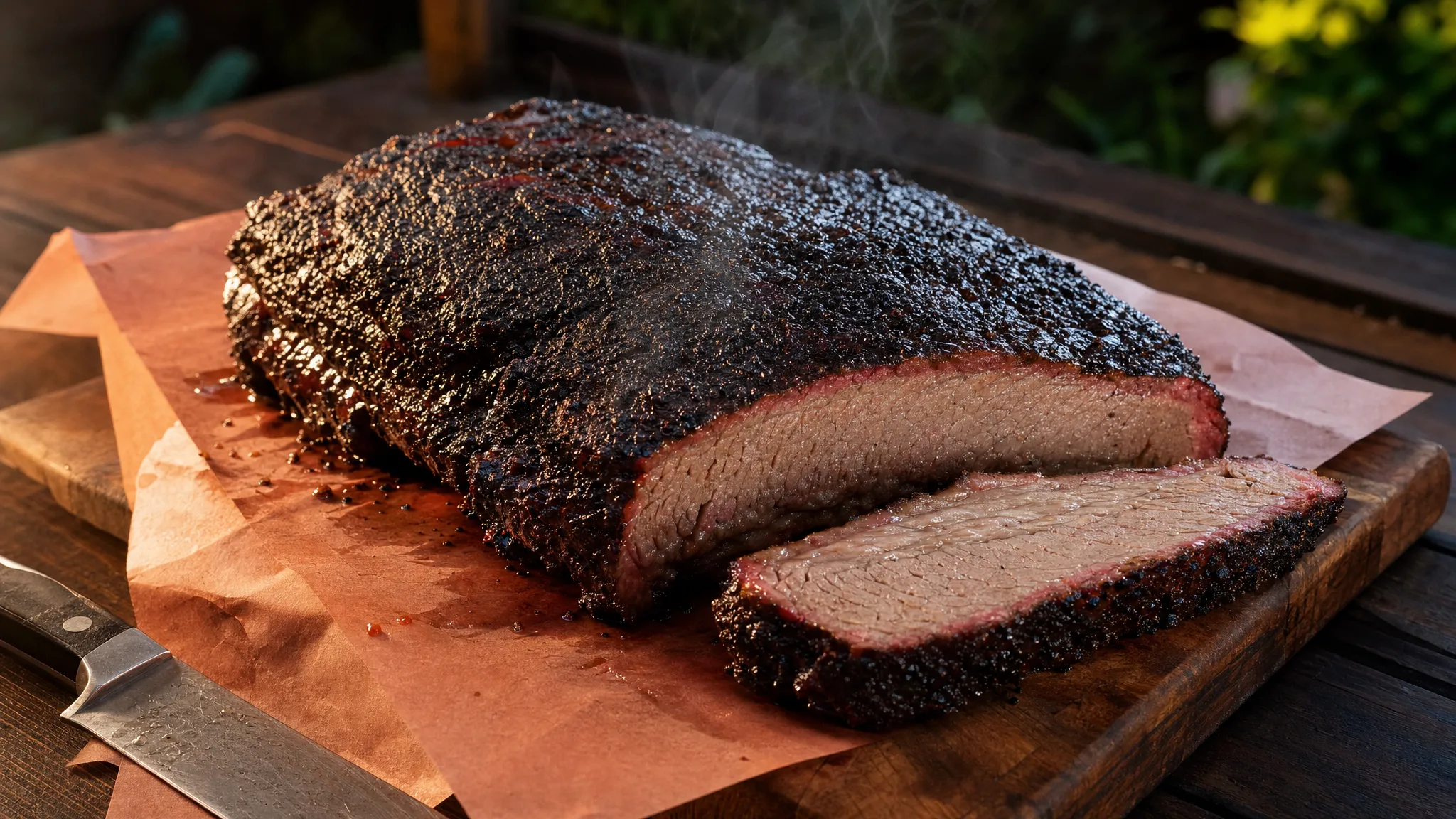
You spent fourteen hours on that brisket. You pulled it off the smoker at midnight with a bark that crackled and a flat that jiggled like set custard. Then Tuesday rolled around, you unwrapped the leftovers, and it came back gray, tight, and dry enough to use as a doorstop. If that story sounds familiar, you are not alone — and the good news is that it is almost never the meat's fault. Reheating is a second cook, and it follows different rules than the first one.
Here is the whole game in one sentence: barbecue dries out when you heat it too fast, too hot, or uncovered, because the muscle fibers squeeze and the water you worked so hard to keep inside gets pushed out before it ever reaches your plate. Fix those three things and leftover brisket, pulled pork, ribs, and chicken come back close to the way they left the pit — sometimes even better, because now you get to add sauce and fat on purpose.
This guide covers the exact temperatures, times, wrapping, and liquid tricks for every kind of leftover BBQ, plus the food safety numbers you actually need to respect. No guessing, no "just warm it up."
Why Reheated Barbecue Dries Out.
Meat is a bundle of muscle fibers full of water, and heat does two things to it. It loosens the connective tissue that made the meat tender in the first place, and it contracts the fibers, which squeezes moisture toward the surface where it evaporates. The first cook balanced those forces over many hours at low temperature, letting collagen melt into gelatin while the surface stayed moist enough to limit evaporation. The second cook does not get that luxury. You are starting with already-cooked meat, so there is no collagen left to convert — only fiber contraction to gain.
That is why the single most damaging thing you can do is throw cold brisket into a 400°F oven. The outside hits searing temperature while the inside is still at 38°F, the surface moisture flashes off, the fibers clench, and by the time the center warms up the outer half-inch is jerky. Add an uncovered pan and you have created a convection dehydrator in your own kitchen.
The antidote is boring but effective: low ambient heat, a covered or wrapped environment to trap steam, a splash of liquid to raise the humidity, and a thermometer so you stop the moment the meat is hot instead of letting it keep cooking.
The Four Rules That Fix Almost Everything.
Go low.
Treat reheating like a holding cabinet, not a second smoke. Anywhere from 225°F to 275°F in the oven gives you a gentle rise with very little extra moisture loss. Higher heat makes the outside hot long before the inside, which is exactly backwards from what you want.
Cover it and add moisture.
Foil over a pan, a sealed foil packet, a lidded Dutch oven, a vacuum bag in a water bath — any of these creates a humid microclimate. A quarter cup of liquid per pound of meat is a good working ratio: beef broth for brisket, apple juice or cider vinegar for pork, a little water or beer for ribs, chicken stock for poultry. You are not making soup. You are just keeping the air around the meat from acting like a sponge.
Heat it whole, slice it after.
Every cut surface is an escape route for juice. A whole brisket point or a full rack of ribs reheats far better than pre-sliced portions, because the intact surface holds moisture in. If your meat is already sliced, accept that it will come back a little drier and compensate with more liquid and a shorter reheat.
Use a thermometer and stop early.
The USDA's food safety guidance for reheating leftovers is an internal temperature of 165°F, and that is the number to hit for anything you are serving to guests or kids. Many pitmasters and recipe developers pull closer to 150°F to 155°F, the range where pasteurization happens quickly and the meat stays noticeably juicier — a defensible call for your own dinner, less so for a crowd. What is not negotiable is that you measure. Aim for the target, check in a couple of spots, and get the meat out of the heat the moment it gets there.
Reheating Brisket the Right Way.
Brisket is the hardest leftover in barbecue because it has the least fat and the most surface area per serving. Two things save it: wrapping and patience.
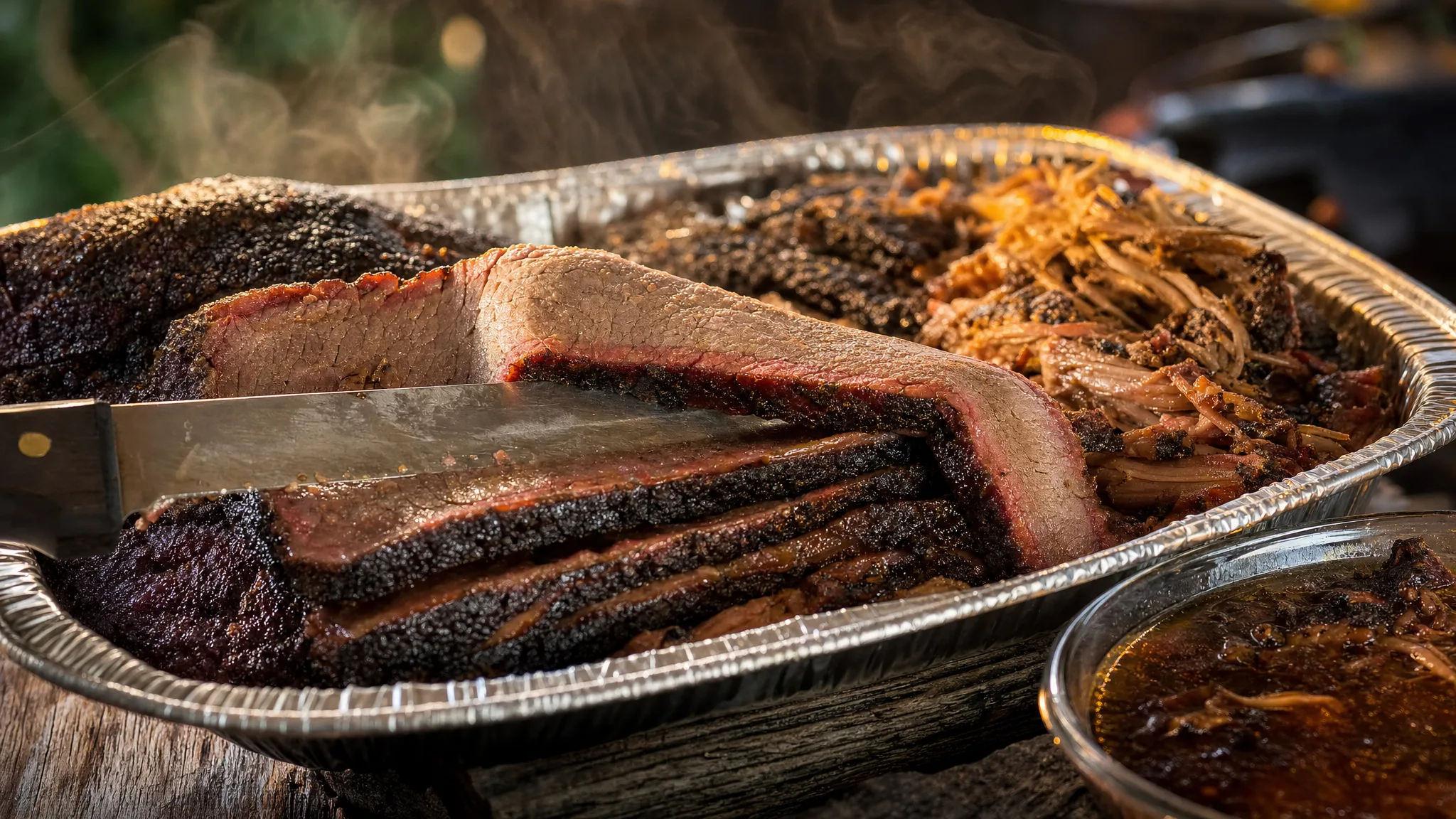
If you have a whole or half packer, set your oven or smoker to 250°F. Put the brisket in a foil pan, add a half cup of beef broth, and cover it tightly with foil — or wrap it in butcher paper and then foil if you want to protect the bark. Expect roughly 45 minutes to an hour and a half depending on the size, and check the internal temperature at 45 minutes. Pull it at 160°F to 165°F.
A foil-wrapped brisket at 225°F is the other common path, and it works well if you have time. The lower the ambient temperature, the wider your margin for error, so 225°F is the forgiving choice for a big piece of meat and 275°F is fine for smaller portions.
If your brisket is already sliced, layer the slices in a foil pan with a couple of tablespoons of broth or au jus between layers, cover, and reheat at 275°F for 15 to 20 minutes. Do not stack it six inches deep — thin layers heat evenly and stay moist.
The best method available, if you own an immersion circulator, is sous vide. Vacuum-seal whole brisket or thick slices with a spoonful of its own defatted juices, and hold it at 150°F to 155°F for one to two hours. The meat comes out uniformly warm, slack, and juicy — genuinely close to fresh. If you have not yet read our guide on how long to rest a brisket, it explains why the same moisture mechanics that make resting work also make gentle reheating work.
The burnt ends exception.
Burnt ends are already twice-cooked and glazed, so they reheat differently. Put them in a foil pan with a spoonful of their braising liquid or a little extra BBQ sauce, cover, and warm at 300°F for 15 minutes, then uncover for five minutes to re-stick the glaze. They will tighten up if you push them much past that.
Reheating Pulled Pork Without Turning It to Sawdust.
Pulled pork is forgiving because it is shredded — every piece is thin, so it heats fast and evenly. That is also why it dries fast. The fix is a covered pan and a real dose of liquid.
Spread the pork in a baking dish, add about a quarter cup of liquid per pound (apple juice, broth, or a mix of cider vinegar and water), cover tightly with foil, and heat at 250°F to 275°F for 30 to 45 minutes, stirring once at the halfway point. You want 165°F in the thickest part of the pile. Take the foil off for the last five minutes if you want the edges to firm up instead of steaming.
The slow cooker is the low-effort option and it works well for a crowd: pork plus a half cup of liquid on the low setting for two hours, stirred occasionally, lid on. Just do not leave it on warm all afternoon, because pork will keep softening until it turns to paste.
Sous vide is again the quality champion — vacuum-sealed pulled pork at 150°F for 45 minutes to an hour comes out almost indistinguishable from fresh. If you smoke your own butts, our walkthrough on how to smoke a pork butt for perfect pulled pork covers the cook side of the equation, including the stall and wrap timing that determine how much moisture you have to work with later.
One trick worth stealing: reserve some of the defatted juices from the original cook and freeze them in an ice cube tray. Two of those cubes in the pan is a better moisture boost than any broth you can buy.
Reheating Ribs So They Still Have a Bite.
Ribs fail in the opposite direction from brisket. They rarely dry out — they go mushy, sliding off the bone into a texture that is technically tender and totally wrong. The goal is to bring them back to temperature without another round of steam-softening.
The oven method: lay the rack on a sheet of heavy foil, splash two or three tablespoons of liquid (water, apple juice, or a thin vinegar mop) onto the foil, wrap tightly, and heat at 250°F for 20 to 30 minutes. Check at 20. You are looking for 145°F to 165°F internal, and honestly the lower end of that range eats better.
If you want the bark back, finish them. Unwrap, brush with a thin layer of sauce, and give them three to five minutes over direct heat on a hot grill, or two minutes under a broiler, watching constantly. That brief high heat re-crisps the surface without giving the interior time to overcook. This indirect-then-direct sequence is the same logic behind our no-wrap rib method, where bark is built deliberately instead of accidentally.
For individual ribs rather than a full rack, cut the time to 12 to 15 minutes and use a foil packet rather than a pan.
Reheating Chicken Without Rubber Skin and Chalky Breast.
Poultry is the food-safety sensitive one, and it is also where the 165°F rule genuinely matters — chicken is the leftover most likely to be underheated in the middle. The trick is hitting 165°F everywhere while keeping the exterior from drying.
Put the pieces in a baking dish, add a cup of chicken broth or water to the bottom (not over the skin), cover with foil, and bake at 350°F for about 15 minutes. Then uncover and give it another five minutes to re-crisp the skin. Check the thickest part of the largest piece — 165°F is the target.
Whole smoked or grilled chicken follows the same pattern with more time: covered at 300°F to 325°F for 30 to 45 minutes, then uncovered for 10 minutes to firm the skin. A meat thermometer is non-negotiable here because the breast and thigh will not agree with each other.
Dark meat is far more forgiving than white. Thighs and legs can go to 175°F to 185°F and actually improve, which is why our chicken thigh guide recommends pulling them hotter than breast meat in the first place. If you are reheating a mixed batch, take the white meat out first and give the dark meat another ten minutes.
Reheating on the grill works well for chicken as long as you stay indirect and covered. Direct heat on cold chicken is how you get burnt skin and a cold center in the same bite.
The Numbers at a Glance.
Keep this table where you can find it on a Tuesday night. All times assume the meat is refrigerated, not frozen, and all internal temperatures are measured with an instant-read thermometer.
| Leftover | Oven Temp | Method | Time | Pull At |
|---|---|---|---|---|
| Whole brisket or half packer | 250°F | Foil pan, ½ cup broth, covered | 45–90 min | 160–165°F |
| Sliced brisket | 275°F | Layered with broth, covered | 15–20 min | 160–165°F |
| Pulled pork | 250–275°F | Covered pan, ¼ cup liquid per lb | 30–45 min | 165°F |
| Ribs, full rack | 250°F | Foil packet with a splash of liquid | 20–30 min | 145–165°F |
| Ribs, individual | 250°F | Foil packet | 12–15 min | 145–165°F |
| Chicken pieces | 350°F | Covered with broth, then uncovered | 15 min + 5 min | 165°F |
| Whole chicken | 300–325°F | Covered, then uncovered to crisp | 30–45 min + 10 min | 165°F breast |
| Burnt ends | 300°F | Covered with glaze, then uncovered | 15 min + 5 min | 165°F |
| Smoked sausage or brats | 300°F | Covered pan with a splash of beer | 15–20 min | 165°F |
Frozen leftovers take longer but are safe to reheat without thawing first — expect roughly 50% to 75% more time and check the center carefully, since frozen meat heats from the outside in and the middle lags badly.
Ranking the Methods From Best to Worst.
1. Sous vide.
Nothing else comes close. A sealed bag in a water bath at 150°F cannot overshoot, cannot dry the surface, and holds the meat at a precise temperature indefinitely. Sliced meat takes 30 minutes; a whole brisket takes an hour and a half to two hours. If you already own a circulator, this is the reason to keep it.
2. Covered oven at low heat.
The default for good reason: it handles volume, it is predictable, and a foil pan with broth does a convincing impression of a humid holding cabinet. This is what to use when you are feeding eight people.
3. Indirect grill or smoker.
Best when you want the meat to taste like it came off the pit, because it kind of does. Run 250°F indirect, keep the meat in a foil pan covered, and finish uncovered for a few minutes if you want a little bark refresh. The downside is that it takes attention and a lit fire.
4. Slow cooker.
Great for pulled pork and sauces, mediocre for anything you want to hold a shape. Use low heat, add liquid, and stir. Do not walk away for four hours.
5. Steaming.
Underrated for pulled pork and sliced brisket in small amounts — a steamer basket over simmering water for five to eight minutes brings meat back to temperature with almost zero moisture loss. It does nothing for bark, so it is a texture trade.
6. Microwave.
It works, and pretending otherwise is silly when you have four minutes and a hungry kid. But microwave energy heats water unevenly and aggressively, so meat goes from cold to rubbery in a hurry. If you must: use 50% power, cover with a damp paper towel, add a splash of liquid, heat in 30-second bursts, and let it rest a minute before checking. Never microwave a whole brisket piece and expect anything good.
Five Mistakes That Ruin Good Leftovers.
Starting from cold in a hot oven. Give the meat ten minutes on the counter while the oven preheats. It reduces the temperature gradient and shortens the time the surface spends drying.
Saucing before reheating. Sugar burns and sauce scorches while the inside is still cold. Sauce at the end, or serve it on the side where people can add their own.
Reheating more than you will eat. Every reheat is a moisture loss. Reheat a portion, not the whole pan, and reheat it once.
Cranking the heat to save time. The difference between 250°F and 400°F is not a faster reheat — it is a drier one. If you are in a hurry, use thinner portions, not higher heat.
Skipping the rest. Pull the meat out, leave it covered, and give it five minutes. Carryover heat finishes the job and the juices redistribute instead of running onto the cutting board. The same principle is why resting matters so much right after cooking, as covered in our guide to how long to rest meat after grilling.
Storing Leftovers So They Are Worth Reheating.
Half of reheating quality is decided before the meat ever hits the fridge. The USDA's guidance is straightforward and worth following closely:
Refrigerate leftovers within two hours of cooking — one hour if the outdoor temperature is above 90°F, which matters a lot for a summer cookout. Bacteria multiply fastest between 40°F and 140°F, so the goal is to get through that zone quickly in both directions. Cool meat in shallow containers rather than one deep tub, cut large cuts into smaller portions, and refrigerate promptly. Wrap tightly — airtight packaging keeps bacteria out and moisture in, which is exactly what you want for round two.
Cooked leftovers keep three to four days in the refrigerator and three to four months in the freezer. They stay safe longer than that in the freezer, but they lose moisture and flavor, and a dried-out brisket does not improve with age.
Slice brisket and pork against the grain only when you are ready to serve. Storing whole or in large chunks and slicing later preserves noticeably more juice, and it makes the reheat more forgiving.
Label everything with a date. A freezer full of unmarked foil packets is how good barbecue becomes mystery meat.
Making Leftovers Taste Better Than the First Time.
This is the part nobody tells you: reheating gives you a second chance at flavor that the original cook did not offer. Use it.
Add fat. A pat of butter over sliced brisket, a spoonful of bacon fat over pulled pork, a drizzle of olive oil on chicken — fat carries flavor and coats the palate, and it masks the slight dryness that any reheat produces.
Add acid. A squeeze of vinegar or a splash of hot sauce wakes up smoked meat that has spent two days tasting flat. This is the entire logic behind Carolina-style vinegar sauce, which exists largely because leftover pork needs a lift.
Add fresh texture. Crusty bread, pickled onions, crisp slaw, a handful of chopped herbs. Reheated meat has a soft texture; contrast is what makes it feel like a meal instead of a reheat. Our brisket sandwich guide is built entirely on that idea.
Change the format. Brisket becomes tacos, pulled pork becomes nachos, ribs become fried rice, chicken becomes soup. When the meat is already cooked, the second dish is fifteen minutes of assembly. Nobody at your table will describe it as leftovers.
The Short Version.
Low heat, covered, with a splash of liquid, stopped at 165°F — that is the whole answer for brisket, pork, ribs, and chicken. Sous vide at 150°F beats everything if you have the gear. Slice late, sauce at the end, and never reheat the same meat twice.
The brisket you pulled off the smoker at midnight was worth the effort. Treat Tuesday's reheat with a fraction of that care and it will taste like it.